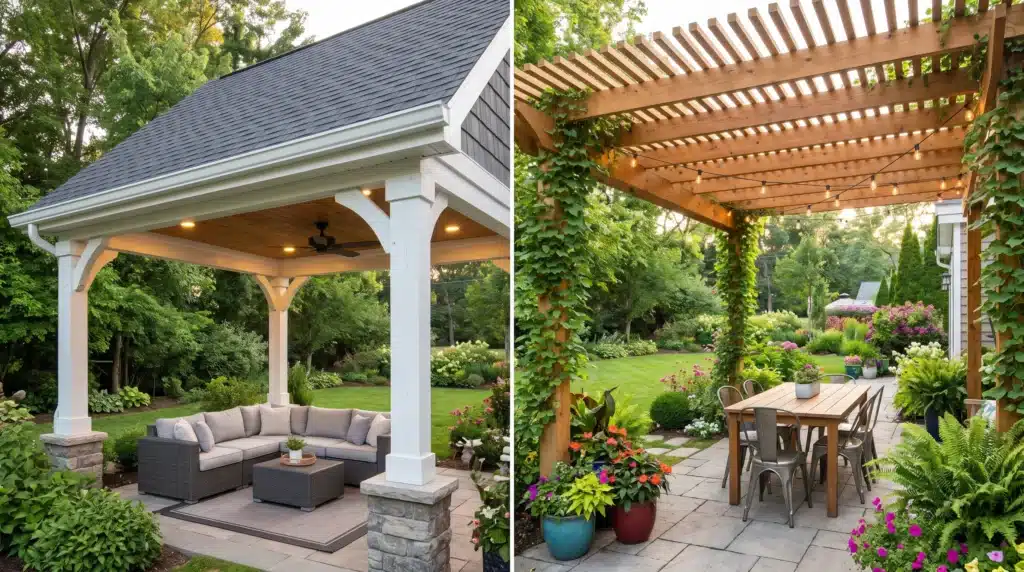
Introduction Does your backyard feel unusable when the sun is scorching or the rain starts pouring? A covered patio is the perfect solution to reclaim your outdoor space year-round. In this guide, you will learn how to design, build, and decorate a covered patio that perfectly matches your home’s aesthetic. Discover practical steps to create an outdoor oasis you will never want to leave.
Step 1 — Plan Your Patio Layout and Purpose What to do: Decide how you want to use the space (dining, lounging, or an outdoor kitchen) before choosing a cover. How to do it: Measure your available backyard space and sketch a rough floor plan. If you want a dining area, ensure there is at least 3 feet of clearance around your table. Practical explanation: Knowing your primary use dictates the height, materials, and size of the roof structure you need to build.[Image idea: A blueprint sketch of a patio layout with dining and lounge zones marked]
Step 2 — Select the Right Cover Structure What to do: Choose between a solid roof extension, a pergola, or a retractable awning based on your weather needs. How to do it: Compare local climate conditions. For heavy rain, a solid shingled roof matching your house is best. For partial shade, a wood or aluminum pergola is ideal. Common mistake to avoid: Do not forget to check local zoning laws, permit requirements, and HOA guidelines before buying materials or pouring concrete.[Image idea: A side-by-side comparison photo of a solid roof patio and a slatted wood pergola]
Step 3 — Add Lighting and Comfort Features What to do: Install weather-resistant fixtures to make the patio usable at night and in cooler months. How to do it: Hang outdoor-rated string lights or install recessed LED lighting in a solid ceiling. Add a damp-rated ceiling fan for summer airflow and a fire pit or electric heater for winter warmth.
Continued on the next page →
Tips for Better Results
- Tip 1: Keep it simple by matching the patio cover material to your home’s existing exterior trim.
- Tip 2: Choose outdoor furniture made of teak or powder-coated aluminum to resist moisture damage.
- Tip 3: Avoid blocking natural light into your home by using skylights or translucent polycarbonate panels in solid patio roofs.
- Tip 4: Try adding outdoor curtains or motorized shades for privacy, bug prevention, and extra wind protection.
- Tip 5: For a better result, incorporate potted plants and climbing vines to blend the structure naturally into the garden.
FAQ
What is the best way to clean a covered patio? Sweep the floor weekly and use a pressure washer on a low setting for the hardscape surfaces once a season. Wipe down structures with mild soapy water.
How often should I inspect the roof structure? Check the posts, beams, and roofing material for water damage, rust, or wear at least twice a year—ideally in the spring and fall.
Can I do this at home? Installing simple retractable awnings, shade sails, or pre-fabricated pergolas are DIY-friendly weekend projects, but solid structural roof extensions usually require professional contractors.
What should I avoid? Avoid ignoring drainage. Always ensure your patio floor and roof slope slightly away from your home’s foundation to prevent water pooling and structural damage.
Conclusion A well-designed covered patio instantly upgrades your lifestyle, providing a reliable space for entertaining or relaxing regardless of the forecast. By planning your layout, choosing the right structure, and adding cozy touches, you can create the ultimate backyard retreat. Start measuring your space today to bring your vision to life! For more inspiration, check out our guide on